


Sleep apnoea is a common sleep-related breathing disorder in which breathing repeatedly stops or becomes significantly reduced during sleep. These interruptions can occur many times during the night, reducing oxygen levels and disturbing normal sleep.
Although snoring is often associated with sleep apnoea, loud or persistent snoring is not the only symptom. Untreated sleep apnoea can affect daytime energy, concentration, mood, and overall health. Early diagnosis and appropriate treatment can significantly improve sleep quality and quality of life.
What Is Sleep Apnoea?
During normal sleep, the muscles supporting the upper airway relax but generally allow air to pass into the lungs. In obstructive sleep apnoea, the upper airway becomes partially or completely blocked during sleep.
The brain may briefly wake the person to restore normal breathing. These awakenings can happen repeatedly without the person being aware of them, resulting in fragmented and poor-quality sleep.
There are different types of sleep apnoea, with obstructive sleep apnoea (OSA) being the most common.
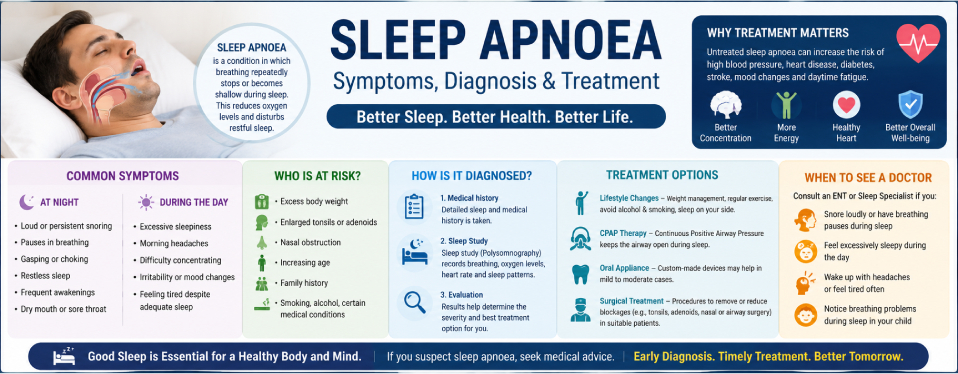
Symptoms of Sleep Apnoea
Symptoms may occur during sleep as well as during the day.
Night-Time Symptoms
Common signs include:
- Loud or persistent snoring
- Pauses in breathing during sleep
- Gasping, choking, or snorting during sleep
- Restless sleep
- Frequent awakenings
- Dry mouth or sore throat in the morning
- Night-time sweating
- Frequent urination during the night
A bed partner or family member may be the first person to notice pauses in breathing or unusual breathing patterns during sleep.
Daytime Symptoms
Poor-quality sleep may result in:
- Excessive daytime sleepiness
- Morning headaches
- Difficulty concentrating
- Memory problems
- Irritability or mood changes
- Reduced energy
- Feeling unrefreshed after waking
- Reduced work or academic performance
Daytime sleepiness can also increase the risk of accidents, particularly when driving or operating machinery.
Who Is at Risk?
Sleep apnoea can affect people of different ages. The risk may be increased by factors such as:
- Excess body weight
- Enlarged tonsils or other upper-airway structures
- Nasal obstruction
- Increasing age
- Family history of sleep apnoea
- Certain anatomical features of the jaw or airway
- Alcohol consumption, particularly close to bedtime
- Smoking
- Certain medical conditions
Children can also develop obstructive sleep apnoea. In children, enlarged tonsils and adenoids are common contributing factors.
Sleep Apnoea in Children
Sleep apnoea may present differently in children. Parents may notice:
- Loud snoring
- Mouth breathing
- Restless sleep
- Pauses in breathing
- Bedwetting
- Morning headaches
- Daytime sleepiness
- Difficulty concentrating
- Irritability or behavioural changes
- Poor school performance
Persistent snoring or suspected breathing pauses during sleep should be evaluated by a pediatrician or ENT specialist.
How Is Sleep Apnoea Diagnosed?
A healthcare professional will usually begin with a detailed medical and sleep history and a physical examination. Information from a sleep partner or family member can also be helpful.
Depending on the symptoms and risk factors, a sleep study (polysomnography) may be recommended. A sleep study records various parameters during sleep, such as breathing patterns, oxygen levels, heart rate, and sleep activity.
In selected patients, a home sleep apnoea test may also be appropriate.
An ENT evaluation may be particularly useful when nasal obstruction, enlarged tonsils, adenoids, or other upper-airway abnormalities are suspected.
What Is the Apnoea-Hypopnoea Index (AHI)?
The Apnoea-Hypopnoea Index (AHI) is one of the measurements used during a sleep study. It represents the average number of significant breathing interruptions per hour of sleep.
The AHI, together with symptoms, medical history, oxygen levels, and other findings, helps clinicians assess the severity of obstructive sleep apnoea and determine an appropriate treatment approach.
Treatment for Sleep Apnoea
Treatment depends on the type and severity of sleep apnoea, the patient’s symptoms, anatomy, and other health factors.
Lifestyle Changes
For some people, lifestyle measures can form an important part of treatment. These may include:
- Maintaining a healthy weight
- Regular physical activity
- Limiting alcohol, particularly before bedtime
- Avoiding smoking
- Maintaining a regular sleep schedule
- Sleeping in a position that helps reduce airway obstruction, when appropriate
Lifestyle changes may be recommended alongside other treatments rather than as a replacement for clinically indicated therapy.
CPAP Therapy
Continuous Positive Airway Pressure (CPAP) is a commonly used treatment for obstructive sleep apnoea. A CPAP device delivers a continuous flow of air through a mask to help keep the upper airway open during sleep.
When appropriately prescribed and used regularly, CPAP can reduce breathing interruptions and improve sleep quality.
Oral Appliance Therapy
Selected patients may benefit from a custom oral appliance designed to help maintain an open airway during sleep. These devices are generally considered for specific cases, particularly when CPAP is unsuitable or not tolerated.
ENT and Surgical Treatment
When structural problems contribute significantly to airway obstruction, surgical treatment may be considered.
Depending on the individual’s condition, procedures may address:
- Enlarged tonsils or adenoids
- Nasal obstruction
- Soft palate or other upper-airway structures
- Selected jaw or airway abnormalities
Surgery is not appropriate for everyone with sleep apnoea. A detailed assessment is required before deciding whether an operation is suitable.
Why Treating Sleep Apnoea Matters
Repeated interruptions in breathing can prevent the body from getting normal, restorative sleep. Over time, untreated sleep apnoea may be associated with increased health risks, including cardiovascular and metabolic problems.
Treatment can help improve:
- Sleep quality
- Daytime alertness
- Concentration and memory
- Mood and daily functioning
- Quality of life
When Should You See a Doctor?
Consult a doctor or ENT specialist if you or someone close to you notices:
- Loud, persistent snoring
- Repeated pauses in breathing during sleep
- Gasping or choking at night
- Excessive daytime sleepiness
- Morning headaches
- Persistent fatigue despite adequate time in bed
- Difficulty concentrating
- Sleep-related breathing problems in a child
If breathing pauses or severe daytime sleepiness are present, medical evaluation should not be delayed.
Takeaway
Sleep apnoea is a treatable condition, but it can often go unrecognised because many symptoms occur while a person is asleep. Persistent snoring, witnessed breathing pauses, gasping during sleep, and excessive daytime sleepiness should not be ignored.
With appropriate evaluation and personalised treatment, many people with sleep apnoea can achieve better sleep, improved daytime functioning, and a better quality of life.